TL;DR
-
Most AI agent projects fail because of data, not technology. 70% of organizations struggle with data quality, governance, and integration issues.
-
The two data scenarios: Either you don't have relevant data for what you want the AI to do, or you have messy, scattered data that's unusable.
-
AI can't fix bad data. No LLM is smart enough to work with incomplete records, inconsistent formats, or fragmented information.
-
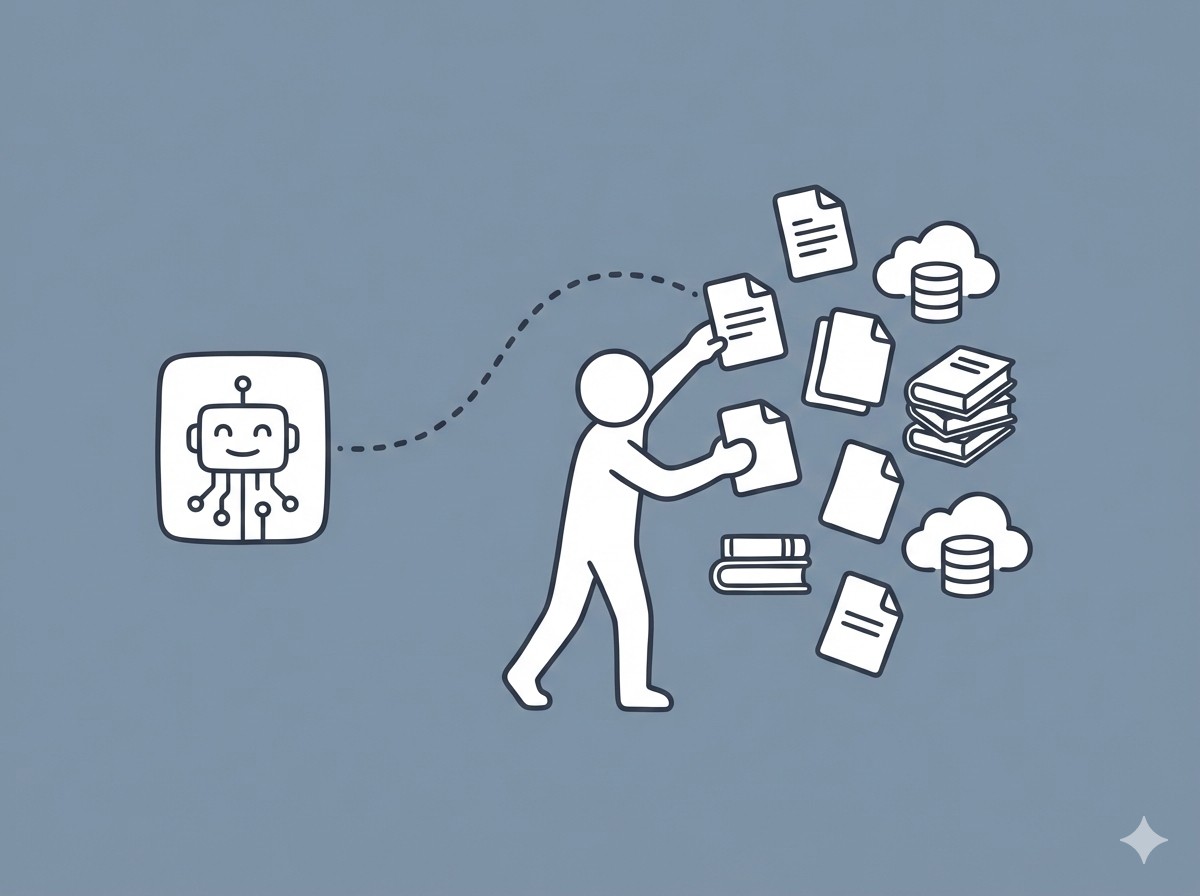
Humans are the solution. Data doesn't organize itself. People must connect sources, apply judgment, transform information, and maintain quality on an ongoing basis.
-
Data exists-but needs curation. Websites, LinkedIn pages, emails, CRM notes, posts-the information is there. It just needs human work to make it AI-ready.
-
This is ongoing work, not a one-time fix. Sustainable AI requires continuous human involvement in data management.
-
This week: Run a "Data Reality Audit" to understand what you have, what's usable, and what needs work.
The data wall: where AI agent projects go to die
If you've explored building an AI agent or agentic workflow, you've probably heard the pitch:
AI agents can automate your workflows, respond to customers, qualify leads, and operate 24/7-no additional headcount needed.
It sounds transformative. And it can be.
But here's what happens to most businesses between "exciting AI demo" and "working AI agent":
They hit the data wall.
You sit down to configure the agent. You're asked:
-
What knowledge base should the agent use?
-
Where is your customer data?
-
What context does the agent need to make decisions?
And that's when the reality sets in:
-
Scenario 1: You don't have the data the agent needs. The information required for your desired capabilities simply doesn't exist in a usable format.
-
Scenario 2: You do have data, but it's a mess. It's scattered across your website, CRM, LinkedIn, email threads, spreadsheets, Slack channels, and someone's local folder. Some of it is outdated. Some of it contradicts itself. None of it is structured for an AI to use.
According to McKinsey's research on AI implementation, 70% of organizations struggle with data quality, governance, and integration-consistently ranking data issues as the primary barrier to AI success.
And here's the hard truth:
No amount of sophisticated AI technology can overcome bad data.
You can use the most advanced LLM on the market. You can hire the best AI engineering team. You can spend six figures on an enterprise AI platform.
But if your data isn't there, or if it's fragmented and inconsistent, your AI agent will be unreliable at best-and actively harmful at worst.
Why AI can't save you from a data problem
There's a persistent myth in AI adoption:
The AI will figure it out. These models are so smart, they can work with anything.
Not true.
AI agents are incredibly good at processing, synthesizing, and generating responses when they have clean, structured, relevant data to work with.
But they cannot:
-
Invent data that doesn't exist. If your product documentation isn't written down anywhere, the agent can't reference it. It will hallucinate instead-generating plausible but incorrect information.
-
Reconcile contradictory information. If your website says one thing, your sales deck says another, and your CRM has a third version, the agent won't "know" which is correct. It will pick one arbitrarily, or worse, blend them into something inaccurate.
-
Fill in missing context. If your CRM records are half-empty-missing lead sources, deal stages, or next steps-the agent can't reconstruct that information. It can only work with what's there.
-
Interpret unstructured data without guidance. If critical information is buried in email threads, meeting notes, or Slack conversations with no clear structure, the agent will struggle to extract meaningful patterns.
The quality of your AI agent's output is directly tied to the quality of its input.
And here's what businesses often don't realize until they're deep into an AI project:
Getting your data into a usable state is real work.
It's not a checkbox. It's not something you can automate away with another AI tool. It's a human-led effort that requires judgment, context, and ongoing maintenance. Research consistently shows that data preparation accounts for 80% of the work in AI projects, and human expertise remains critical throughout the process.
The human element: why people are critical to solving the data problem
Here's the good news:
The data problem is solvable. But the solution isn't more technology. It's more human involvement.
AI agents need humans in three critical ways:
1. Connecting the dots across scattered sources
Your business has information. It's just not in one place.
-
Your website has service descriptions and case studies.
-
Your LinkedIn page has company updates and thought leadership.
-
Your CRM has customer records and deal history.
-
Your email threads have context on client conversations.
-
Your spreadsheets have operational data and project details.
An AI agent can't automatically know which sources to pull from, or how those sources relate to each other.
A human has to:
-
Identify where relevant data lives.
-
Determine what's current and what's outdated.
-
Map relationships between different data sources.
-
Decide what context the agent actually needs for each task.
This isn't a one-time setup. It's an ongoing process of data curation, where humans continuously evaluate, connect, and refine the information available to the AI.
2. Applying judgment to incomplete information
Most business data is messy. Records are incomplete. Fields are inconsistent. Some information is implied rather than stated.
An AI agent doesn't understand nuance the way a human does.
For example:
-
A CRM record says "Follow up next week" but doesn't specify why or what the follow-up should include. A human knows; an AI doesn't.
-
A customer email says "We're not ready yet" but doesn't give a timeline. A human can infer context from the relationship history; an AI can't without explicit data.
-
A LinkedIn post mentions a capability, but your website doesn't list it as a service. A human knows whether that's intentional or an oversight; an AI will be confused.
Humans bring contextual judgment that allows them to interpret, clean, and transform incomplete or ambiguous data into something an AI can actually use.
3. Transforming unstructured data into AI-ready formats
Much of the most valuable business information isn't in a database. It's in:
-
Meeting notes
-
Email threads
-
Social media posts
-
Website copy
-
PDFs and documents
This is unstructured data, and while AI can read it, the agent needs humans to:
-
Extract key points and structure them.
-
Tag information with relevant context (e.g., "This is about our pricing model" or "This is an example of a past customer problem").
-
Normalize formats so the agent knows where to find specific types of information.
-
Continuously update and refine as the business evolves.
AI doesn't do this on its own. Someone has to design the structure, curate the content, and maintain the system.
And that someone is a human.
The ongoing reality: data work never stops
Here's what many businesses don't anticipate:
Data preparation for AI isn't a one-time project.
It's an ongoing discipline.
Your business changes. Your services evolve. Your team grows. Your customers' needs shift. New information gets created every day-emails, posts, CRM updates, documents.
If you set up your AI agent's data once and then walk away, here's what happens:
-
The agent starts operating on outdated information.
-
New services or capabilities aren't reflected in the agent's knowledge.
-
Customer context becomes stale, leading to irrelevant or incorrect responses.
-
Data quality degrades as new, unstructured information piles up without curation.
Sustainable AI requires continuous human involvement:
-
Monitoring: Regularly reviewing the agent's outputs to identify where it's struggling or making mistakes.
-
Updating: Adding new information, removing outdated content, and refining context as the business evolves.
-
Quality control: Ensuring the data feeding the agent remains accurate, consistent, and relevant.
-
Governance: Setting policies around who updates what, how often, and what quality standards must be maintained.
This is the human-AI collaboration model that makes AI agents actually work in production:
-
AI handles scale: Processing large volumes of data, responding to requests, generating outputs quickly.
-
Humans handle judgment: Curating data, providing context, making decisions when the stakes are high, and continuously improving the system.
This human-in-the-loop approach ensures AI systems remain accurate, ethical, and aligned with business goals. You can't "set it and forget it." But you can build a sustainable operation where humans and AI work together effectively.
The practical path forward: how to solve your data problem
If you're facing the data wall, here's the good news:
You don't need perfect data to start. You need a realistic plan and human involvement.
Step 1: Take inventory of what you have
Before you can fix your data problem, you need to understand its scope.
Ask yourself:
-
Where does information about our business currently live?
(Website, LinkedIn, CRM, emails, spreadsheets, Slack, documents, etc.) -
What data sources are most critical for the AI agent we want to build?
(If you're building a sales agent, CRM and email data matter more than internal HR documents.) -
How accessible is this data?
(Can we export it? Is it behind logins or locked in someone's inbox?) -
How current and accurate is it?
(When was it last updated? Are there known gaps or inconsistencies?)
Don't try to catalog everything. Focus on the minimum viable dataset needed for the specific AI use case you're targeting.
Step 2: Identify what's usable vs. what needs work
Not all data is created equal.
Divide your data inventory into three categories:
-
Ready to use: Clean, structured, current, and accessible. This data can feed an AI agent today.
-
Needs work: Exists but requires cleaning, structuring, or transformation before an AI can use it effectively.
-
Missing or unusable: Either doesn't exist, or is so fragmented/outdated that it's not worth salvaging. This data needs to be created or rebuilt.
Be honest about where your data falls. Most businesses overestimate how much "ready to use" data they have.
Step 3: Prioritize human-led data curation
Once you know what needs work, don't try to automate your way out of the problem.
Invest in human-led data curation:
-
Assign someone (internal or external) to clean and structure critical data sources.
-
Have a human review and tag unstructured content (emails, meeting notes, documents) so the AI knows how to use it.
-
Set up a process for connecting disparate sources-for example, linking CRM records to email threads, website content, and LinkedIn activity.
-
Build feedback loops where humans review the AI's outputs and identify data gaps or quality issues.
This work takes time. It's not glamorous. But it's the foundation of any successful AI agent deployment.
Step 4: Build ongoing processes, not one-time fixes
Finally, treat data management as an operational discipline, not a project.
Establish:
-
Regular data reviews: Weekly or monthly check-ins to ensure the AI's data sources remain current.
-
Clear ownership: Assign responsibility for maintaining data quality (e.g., marketing owns website content, sales owns CRM data).
-
Quality standards: Define what "good data" looks like for each source, and create checklists or processes to maintain those standards.
-
Feedback mechanisms: Make it easy for your team to flag when the AI agent is working with bad or outdated information.
The businesses that succeed with AI agents are the ones that treat data as a living asset that requires continuous care-not a static resource they set up once.
One action you can take this week
Here's a practical exercise you can do with your team in 60 minutes:
Run a "Data Reality Audit" for One AI Use Case
-
Pick one specific AI agent idea you're considering.
Example: "An AI agent that qualifies inbound leads from our website." -
Identify the data the agent would need.
Write down every data source required:-
Lead contact info (name, email, company)
-
Company details (size, industry, location)
-
Context about the inquiry (what did they ask about?)
-
Your service offerings (so the agent knows what you do)
-
Past examples of qualified vs. unqualified leads
-
-
For each data source, answer:
-
Do we have this data? (Yes / Partially / No)
-
Where does it live? (CRM / Website / Email / Spreadsheet / etc.)
-
Is it current and accurate? (Last updated when? Any known gaps?)
-
Is it accessible for an AI to use? (Structured format / Exportable / Needs work)
-
-
Rate your overall data readiness:
-
Green: We have most of what we need, and it's usable.
-
Yellow: We have data, but it needs significant cleaning or structuring.
-
Red: We're missing critical data, or what we have is too messy to use.
-
-
If you're yellow or red, identify ONE action to improve data readiness in the next two weeks.
Example: "Export the last 6 months of CRM lead data and have someone review it for completeness."
Deliverable: A one-page document that honestly assesses your data situation for this specific use case-and a concrete next step to move forward.
This exercise will save you months of frustration. It forces you to confront the data problem before you invest in building an agent that can't work.
Data is the foundation-and humans are the builders
The AI platforms are right about one thing: AI agents have enormous potential.
They can automate workflows, scale customer interactions, and free your team to focus on higher-value work.
But here's what the platforms don't tell you:
The success of your AI agent has less to do with the model you choose and everything to do with the data you feed it.
And that data doesn't organize itself.
-
It needs humans to connect scattered sources.
-
It needs humans to apply judgment and context.
-
It needs humans to transform unstructured information into AI-ready formats.
-
It needs humans to maintain quality on an ongoing basis.
The businesses that succeed with AI agents are the ones that recognize this reality early-and build their AI strategy around human-AI collaboration, not AI replacement.
If you're stuck on the data wall, you're not alone. Most businesses face this challenge.
But it's solvable.
Start with a realistic assessment of what data you have. Prioritize human-led curation. Build sustainable processes for ongoing data management.
And if you need help navigating the data problem, or if you want a partner to handle the human-led work of preparing and maintaining your AI-ready data, we can help you build the foundation that makes AI agents work-not just in the demo, but in the real world.