TL;DR
- Professionals who sell alongside their core work lose most of their selling time to research, writing, and follow-ups
- 73% of B2B buyers avoid suppliers who send irrelevant outreach. Autonomous AI outreach makes this worse
- Graduated autonomy is a different approach: the AI starts with full human approval, learns your voice, and earns independence over time
- 44 leads managed, 5 meetings booked, ~24 qualified. Every message sounds like it came from the person it represents
Two Jobs, One Person
I've spent the last decade in professional services. I ran a small software development shop. I worked at Deloitte Digital. I led teams at Commit. Now I'm building Think & Co.
In every one of those roles, I sold. Not because sales was my job. Because that's what happens when you're a founder, a consultant, or a practice lead. You deliver the work AND you fill the pipeline that keeps the work coming.
If you recognize this, you already know the drill. You wrap up a client deliverable, then spend two hours researching prospects, drafting personalized outreach, and following up on conversations that went cold. Research consistently shows that sales professionals spend the majority of their time on activities that aren't actually selling: research, writing, scheduling, admin work.
You're not bad at sales. You're doing two jobs with one person's time. And when one job wins — which it always does — the other stops. 48% of salespeople never follow up even once, yet 80% of deals close after the 5th touch. The pipeline doesn't die dramatically. It dies quietly, in the follow-up that never got sent.
The "Full Automation" Trap
The AI SDR market exploded over the past year. The pitch is seductive: plug in your leads, set some parameters, let the AI blast personalized messages at scale.
The results tell a different story.
73% of B2B buyers actively avoid suppliers who send irrelevant outreach. Bad prospecting doesn't just fail to convert. It damages the relationship before it starts.
And the problem is accelerating. Gartner predicts that by 2028, AI agents will outnumber sellers by 10x, yet fewer than 40% of sellers will report that those agents actually improved productivity. More agents, more outreach, less signal.
The irony: the people who need AI help the most are the ones most damaged by this flood. If you're a consultant or advisor who built your career on genuine relationships, your name on a generic AI-generated email doesn't just waste a prospect's time. It undermines the credibility you spent years building.
What I Built Instead
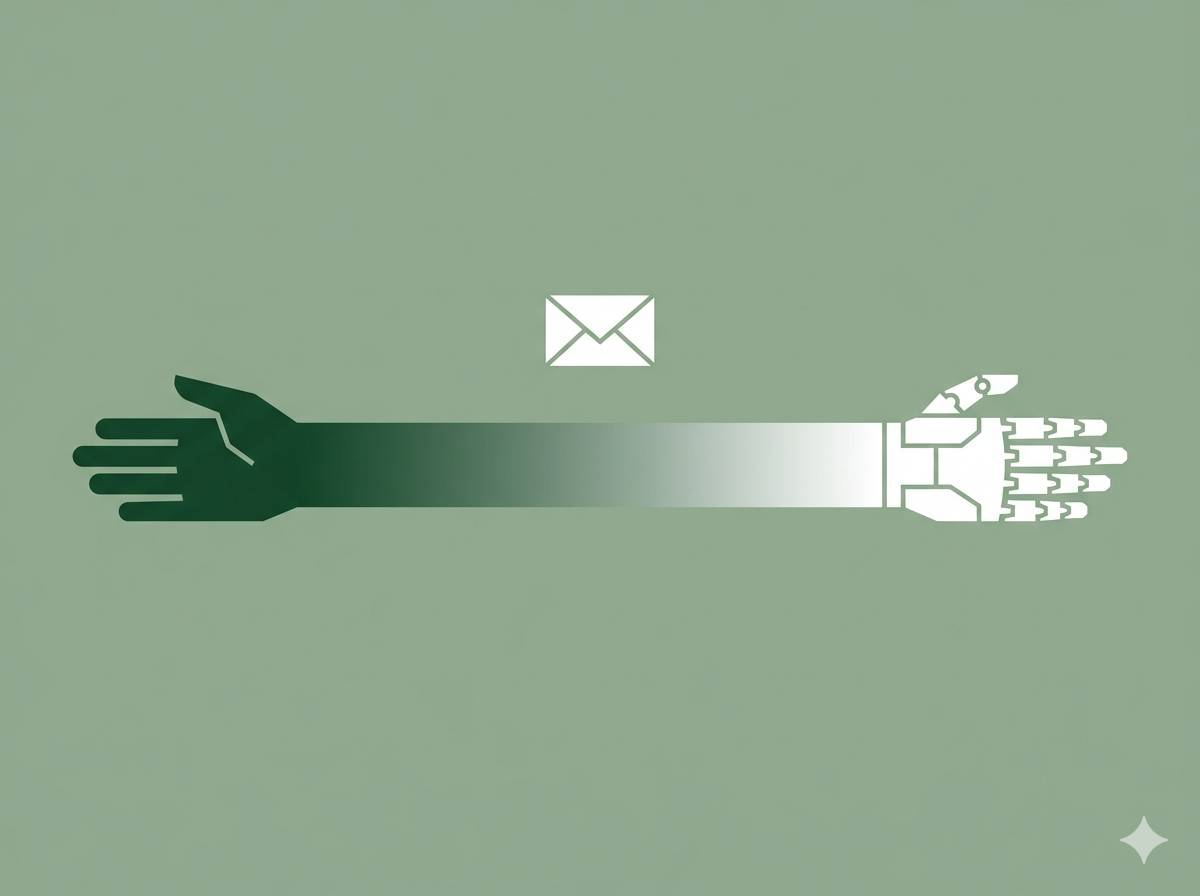
When I set out to build Think & Co's AI SDR, I started from a different premise: the AI has to earn the right to represent you.
I call it graduated autonomy. Here's how it works:
Phase 1: Calibration. The AI researches a lead, enriches their profile, and drafts a personalized message in your voice. During onboarding, you review real drafts and give detailed feedback — not just approve or reject, but why. What's right, what's wrong, and the rules behind it. Five leads, reviewed in depth. By the end of that session, the AI has your voice.
Phase 2: Routine autonomy. The AI handles routine outreach on its own: standard introductions, follow-ups, meeting confirmations. The rules it learned from your detailed feedback guide these decisions. You stop getting interrupted for messages you'd approve without a second thought. This isn't weeks away — it's where you are by the end of onboarding.
Phase 3: Escalation on complexity. Objections, sensitive leads, unfamiliar industries, high-value conversations. These always come back to you. The AI knows what it doesn't know, and routes those situations to the person whose reputation is on the line.
This isn't a toggle you flip once. It's a gradient the AI moves along by demonstrating it understands how you communicate, who you communicate with, and when to step back.
Why This Matters More Than Features
Every AI SDR has a feature list: enrichment, personalization, multi-channel, scheduling. Those are table stakes.
The real question is: would you let this AI speak for you?
Not to a database of 10,000 scraped contacts. To the specific prospect your former colleague referred. To the person you met at a conference last week. To someone who already has a perception of your work.
That's a fundamentally different bar. And it's one that "set it and forget it" automation will never clear.
Gartner predicts that by 2030, 75% of B2B buyers will prefer sales experiences that prioritize human interaction over AI. The answer isn't to remove the human. It's to remove the busywork that keeps the human from being present where they matter most.
What We've Learned So Far
We're early. The numbers are sparse. But they tell a story:
- 44 leads under active management
- 5 meetings booked, ~24 leads qualified
- Multi-language operation running in Hebrew and English simultaneously
- Real edge cases handled: rescheduling, cancellations, objection escalation, opt-out compliance
Every message that goes out reads like it came from the person it represents. Because during onboarding, the manager gave detailed, rule-level feedback on real drafts — and the AI earned its voice from that focused calibration. Not weeks of babysitting. One session of honest, specific feedback.
The Real Design Choice
Full autonomy is appealing because it removes you from the loop entirely. That's also why it fails for relationship-driven professionals.
The people I built this for don't want out of the loop. They want out of the busywork: the research, the first drafts, the scheduling back-and-forth, the follow-up cadence management. They want to stay present for the decisions that matter: which leads to pursue, what tone to strike, when to push and when to hold back.
Graduated autonomy isn't a compromise. It's the design. The AI handles the mechanical work. You stay present for the judgment calls.
The AI SDR isn't replacing you. It's giving you back the hours you lose to everything before the meeting, so you can focus on what happens during it.