TL;DR
-
You don't need full automation to get value. Start with AI that supports your people.
-
When AI leads, risk goes up. Unchecked decisions can hit revenue, brand, and compliance.
-
When humans lead and AI is "in the loop", you get scale and judgment, even on your first pilot.
Human-in-the-loop vs AI-in-the-loop
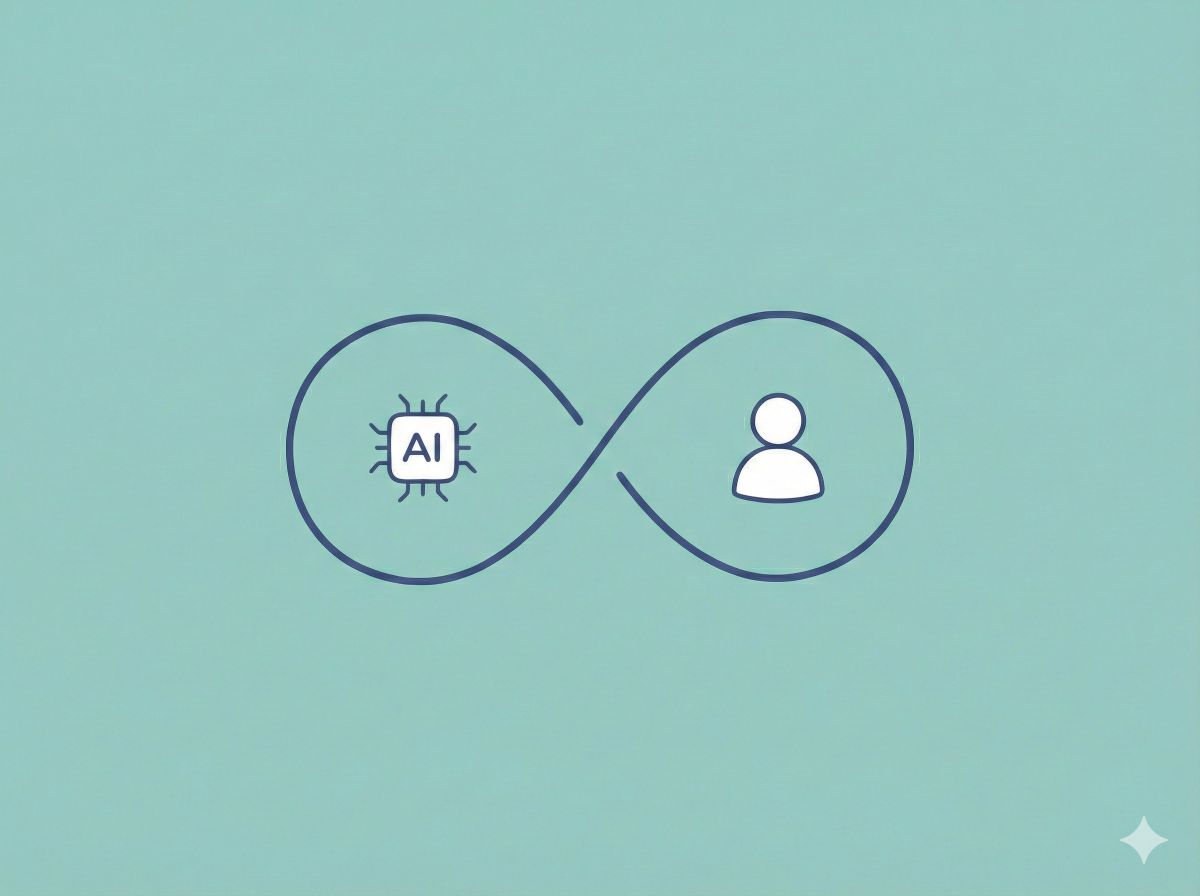
A better question than "Should we trust AI?" is: "Who is actually in charge when we use it?"
-
Human-in-the-loop (HITL):
AI does most of the work; humans approve or correct at certain steps. -
AI-in-the-loop (AIL):
Humans run the process; AI plugs in where it helps with speed, summaries, and suggestions.
For most SMBs, the practical approach is AI-in-the-loop. Your people still own decisions, relationships, and outcomes. AI is the assistant, not the manager.
Why humans still need to be in charge
Before your first pilot, or if you are trying to optimize an existing AI workflow, be clear on what's too important to hand over.
-
Revenue protection
-
Pricing, discounts, and offers are where money is made or lost.
-
A model that over-discounts or mis-qualifies leads can quietly reduce margins.
-
-
Risk and reputation
-
Hiring, lending, or anything with legal or financial impact should never be left to a model alone.
-
Biased or tone-deaf responses travel fast—especially in tight markets.
-
-
Time and complexity
-
Fully automated flows are harder to debug when something breaks.
-
Teams end up firefighting: fixing bad data, apologizing to customers, rewriting flows.
-
Bottom line: a short human review at key moments is cheaper than a long cleanup later.
Before you start: sketch your "human checkpoints"
You don't need a big strategy document. A simple sketch on a whiteboard is enough.
For each workflow where you want to try AI, ask:
-
Where could a mistake be expensive?
Think: lost deal, angry customer, compliance issue, or churned employee. -
Where do humans already touch this process?
Often there is a natural review step you can keep, not invent. -
What should AI be allowed to do on its own?
Drafting, summarizing, tagging, and routing are usually safe. Final decisions are not.
Write one sentence per workflow, such as:
"AI drafts, human approves before anything leaves the building."
These become your first guardrails.
Where AI should be "in the loop," not in control
A simple rule: let AI handle the volume; let humans handle the judgment.
Common first-use cases for SMBs:
-
Sales and marketing
-
AI drafts follow-up emails and call summaries.
-
A human intervenes when AI identified negative sentiment throughout the conversation.
-
-
Customer support
-
AI suggests answers and routes issues.
-
A human handles money-related issues, complaints, or anything emotional.
-
-
Operations and reporting
-
AI pulls data and creates summaries.
-
A human decides what action to take and who needs to know.
-
In all of these, AI is powerful inside your loop. It speeds up what your people already do. It doesn't replace their judgment.
One move this week: a simple "AI readiness & checkpoint" sketch
You don't need to "do AI" across the whole company. Start tiny.
-
Pick one workflow you'd love to make faster.
-
Write it out in 5–7 bullets. Just how it works today.
-
Highlight where a mistake is expensive. Those steps stay human-owned.
-
Circle steps where AI could help with drafting, summarizing, or sorting.
You now have a first view of where AI belongs in your loop, not the other way around.
If you'd like help turning that sketch into a small, low-risk pilot, we're happy to jump on a short working session and map out a human-led AI flow together.