TL;DR
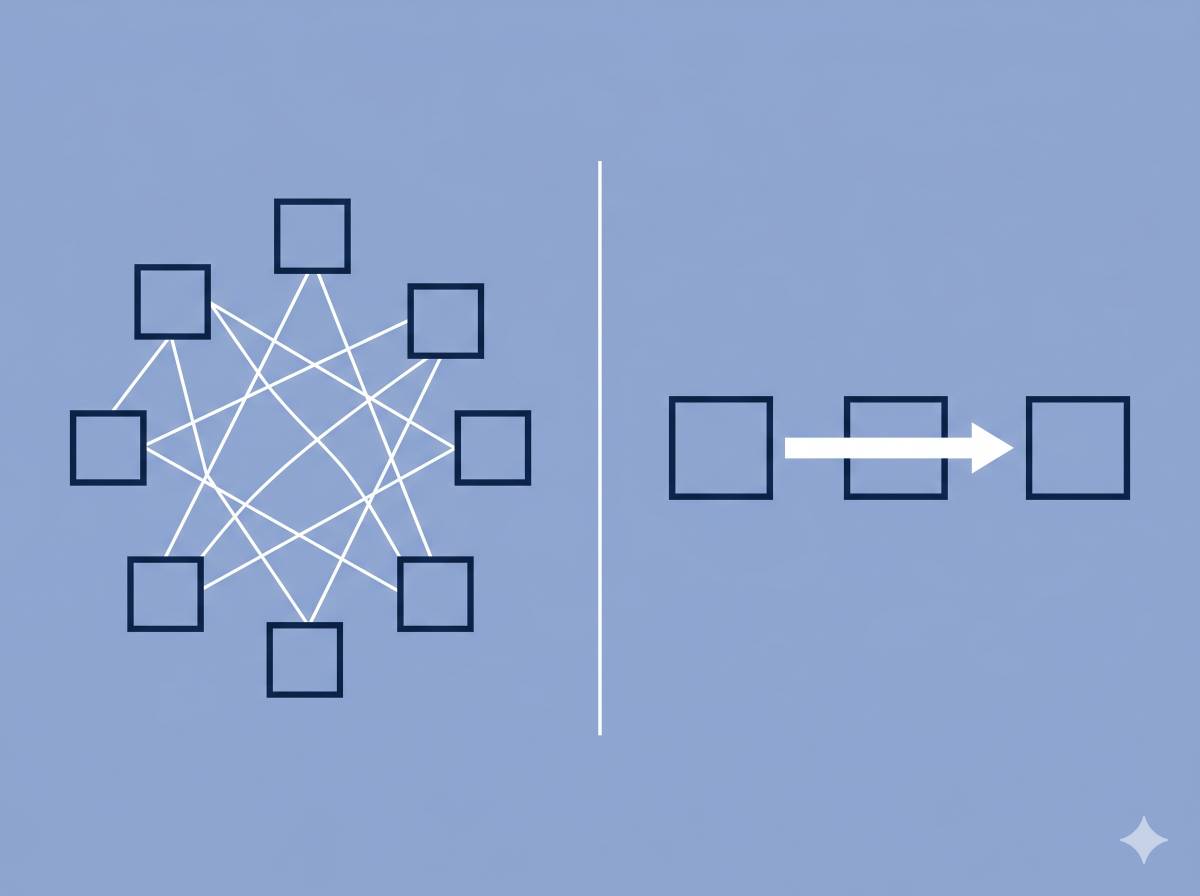
- Most small and mid-size agencies now run 6-8 AI tools. Many ended up with more manual coordination than before they started.
- Gartner surveyed 782 operations leaders in late 2025 and found that among the ones succeeding with AI, 77% say the top factor is integrating AI into existing workflows - not adding new ones.
- The core problem: AI amplifies whatever is running underneath it. Fragmented ops plus AI tools equals faster fragmented ops.
- The agencies winning in 2026 are consolidating their stacks, not growing them.
- The fix starts with a simple audit of what each tool actually does in practice vs. what it was supposed to do.
The pattern nobody talks about in the case studies
I've done a number of agency ops audits in the last year. The setup looks almost identical every time.
A tool for content generation. A different one for scheduling. Another for client reporting. One the project manager uses, one the creative team uses, one someone added because a newsletter recommended it.
Eight tools. Each one works fine in isolation. Together, they created a new layer of work that didn't exist before: figuring out which tool owns which step, manually moving outputs between systems, keeping everyone aligned on which version is current.
The brief I get from these teams is usually some version of: "we've added AI across the board, but the team feels busier than before."
The tools didn't create that problem. They revealed it - and then made it move faster.
Why adding tools to fragmented ops makes things worse
Here's what most agencies miss when they buy an AI tool: the tool amplifies what's already there.
If your ops are clean - clear ownership, defined inputs and outputs, a workflow your team actually follows - AI tools make those workflows faster and cheaper. That's the good case, and it's real.
But if your ops are fragmented - unclear ownership, ad hoc handoffs, work that lives in someone's head or a shared doc with 14 versions - AI tools amplify that too. You're running AI on top of chaos, which mostly means running chaos faster.
McKinsey's State of AI research found that most organizations haven't embedded AI deeply enough into their workflows to realize material business benefits. Their consistent finding on the highest-performing companies: they treat AI as a reason to redesign workflows, not a shortcut around having them.
The agencies struggling are doing the opposite. They buy a tool to solve a workflow problem. The workflow problem doesn't go away. Now there's a tool to manage on top of it.
What AI sprawl actually looks like on the ground
The operational picture is specific.
When three tools handle different parts of the same workflow and they don't talk to each other, someone has to move information between them manually. That person is doing a job the tools were supposed to eliminate.
When there's no clear owner for what happens when a tool produces bad output, the team defaults to manually reviewing everything. The tool saved 20 minutes and created 40 minutes of checking.
When different people on your team use different AI tools for the same task - because different people bought different solutions - your output is inconsistent and your institutional knowledge is scattered across three platforms instead of one.
That reckoning is already hitting agencies. The difference is that a 10-person agency doesn't have a dedicated ops team to absorb the coordination overhead. Every manual handoff lands on a senior person doing work that shouldn't require a senior person.
The consolidation audit
Before adding anything new, run this test on every AI tool in your current stack:
- What workflow does this tool own? Not what it can do - what does it actually do in your current operation, on a normal week.
- Who is responsible when it produces a bad output? If the answer is "whoever notices," that's a gap that will always generate manual work.
- Which tool does this one hand off to, and how? If the answer involves a person copying and pasting, you've built a manual bottleneck into your stack.
Most agencies find two or three tools that can't answer all three questions clearly. Those are the ones creating the extra work.
What the agencies getting this right are doing differently
They're not running fewer tools because they're behind. They're running fewer because they organized first and automated second.
The pattern: map your actual workflows before touching any AI. Which ones have a clear start, clear inputs, clear outputs, a defined owner, and a measurable result? Start there. Build one AI-enabled workflow, measure it, get it stable. Then move to the next.
The tool is the last step. The organized workflow is what makes the tool work.
If your agency has added AI tools in the last year and the team is working harder, not easier, the problem is almost certainly upstream of the tools. Feel free to reach out - happy to do a quick ops read and tell you what I'm seeing. No pitch, just a real conversation.