TL;DR
- The quick-fix doesn't exist. Hiring a LinkedIn influencer for a half-day workshop won't make your team AI-proficient.
- The numbers are brutal. Companies spend $9,100/employee on software but only $1,200 on training. Then they wonder why adoption stalls.
- Change is the real challenge. Only 32% of organizational change initiatives achieve healthy adoption. AI training is no exception.
- What works: Strategic alignment before training, hands-on building over lectures, change management alongside skills, and data literacy before prompt engineering.
The Workshop Illusion
The pitch is compelling. Bring in an AI expert. Run a workshop. Watch your employees transform into AI-savvy operators.
It sounds efficient. It feels proactive. And it almost never works.
The appeal is understandable. Business leaders face real pressure to demonstrate AI progress. A workshop provides visible action, a check mark on the digital transformation list. But visible action and effective action are different things.
McKinsey research shows that 46% of leaders identify skill gaps as a significant barrier to AI adoption, even as nearly every organization has attempted some form of AI training. More than 20% of employees report receiving minimal to no support on AI despite widespread organizational efforts.
If training programs were working, skill gaps wouldn't remain the number one cited barrier.
Why Short-Term Thinking Backfires
The fundamental problem with one-off workshops is temporal mismatch. AI skills have a short half-life. Harvard Business Review notes that AI is transforming job roles at a pace that makes some training programs obsolete before they can even be completed.
A workshop delivered in January teaches tools and techniques that may be outdated by March. The employee who learned "how to prompt ChatGPT" in your workshop is now facing a world of AI agents, multimodal models, and entirely different interfaces.
Meanwhile, the investment gap is staggering. Companies spend an estimated $9,100 annually per employee on software, not including other IT costs. They spend just $1,200 per employee on training and development.
That's a 7.5x gap between buying tools and teaching people to use them.
Then leaders wonder why adoption lags. The tools are there. The skills are not. And a single workshop cannot close a 7.5x investment gap.
The Change Problem Nobody Talks About
Here's what most AI training programs ignore entirely: your employees may not want to change how they work.
This isn't stubbornness. It's human nature.
Gartner research found that only 32% of organizational change initiatives achieve healthy adoption. Even more telling: 79% of employees have low trust in organizational change. They've seen initiatives come and go. They've watched "transformations" fizzle. They're skeptical.
And that skepticism is growing specifically around AI. Deloitte's TrustID Index shows that trust in company-provided generative AI fell 31% between May and July of 2025. Employees are growing uneasy with technology taking over decisions that were once theirs to make.
No workshop addresses this. A LinkedIn star presenting slides about AI capabilities doesn't answer the question your employees are actually asking: "What happens to me?"
Training that ignores change management trains skills that will never be applied.
What Actually Works: Four Principles
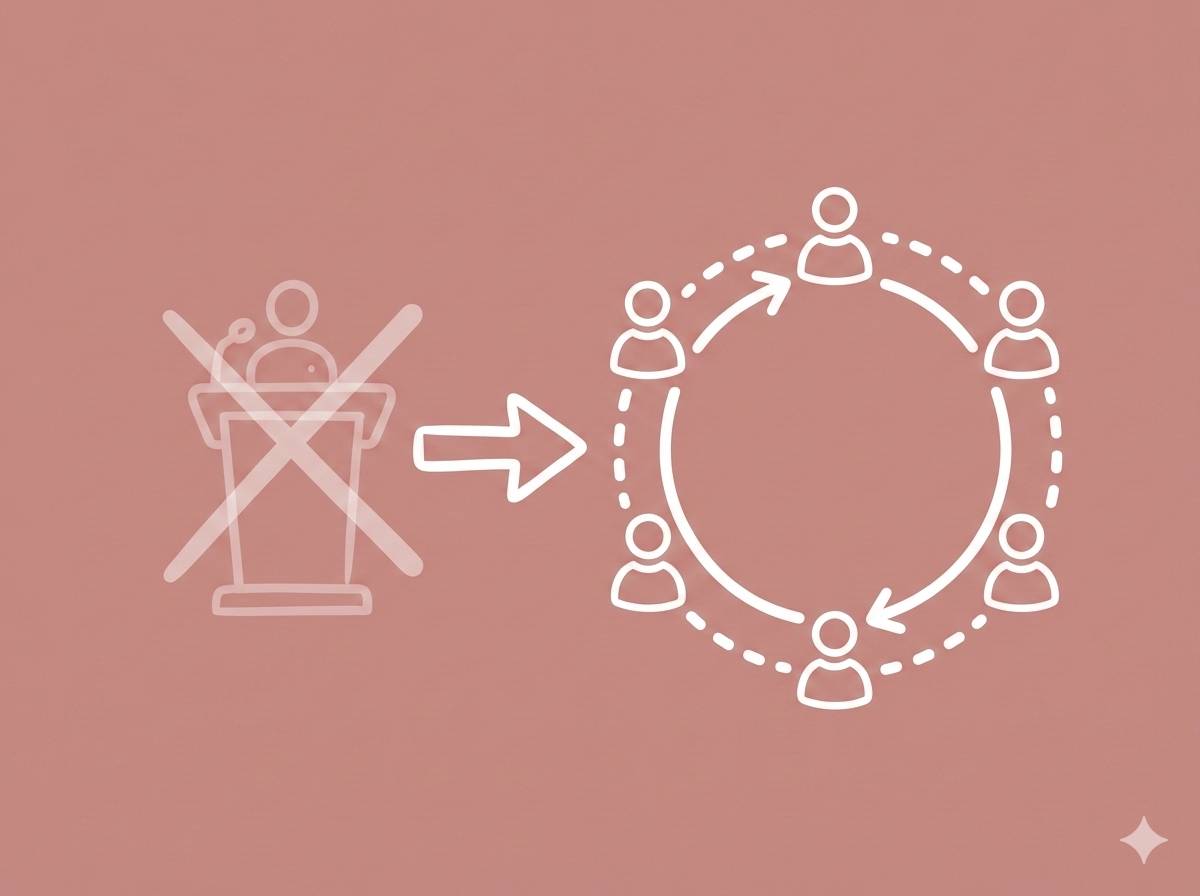
Effective AI capability building looks nothing like a workshop. It requires a different approach entirely.
1. Start With Strategy, Not Skills
Before any training, answer this question: What will AI specifically do for your business?
Not "AI can do amazing things." Not "competitors are using AI." What specific workflows, decisions, or outputs will AI improve in your operation?
If you can't answer this clearly, no training program will help. Your employees will learn generic skills they cannot apply. The training becomes entertainment, not enablement.
Strategic clarity must precede skills development. This is foundational work that no external trainer can do for you.
2. Build, Don't Listen
McKinsey's research on analytics academies found that successful programs combine classroom theory and real work so participants learn by doing. The comparison they draw is telling: "Just like US medical school graduates need residency training to build their diagnostic chops."
Doctors don't become doctors by attending lectures. They become doctors by treating patients under supervision. AI proficiency works the same way.
When employees participate in designing AI workflows for their own work, they learn the mechanics and understand the reasoning simultaneously. They develop ownership. A lecture creates spectators. Building creates practitioners.
Thirty percent of learners say lack of hands-on experience is their biggest frustration with training. They're right to be frustrated. Passive learning doesn't stick.
3. Train for Change, Not Just Tools
Your AI training must address the behavioral shift, not just the technical skill.
Gartner found that routinizing change is 3x more effective than inspirational approaches. That means embedding AI into normal workflows so gradually that using it becomes instinctive, not exceptional.
This requires ongoing support, not a one-day event. It requires managers who model AI usage publicly. When respected team leaders share their AI learning journeys and acknowledge they're still learning, it reduces psychological barriers for everyone else.
The goal is not "everyone attended the workshop." The goal is "everyone uses AI as naturally as they use email."
4. Data First, Prompting Second
Most AI workshops focus heavily on prompting. How to write better prompts. How to structure requests. How to get better outputs.
This is approximately 5% of the actual work.
Gartner notes that half of AI techniques are fueled by data, and data literacy is essential to AI literacy. The unsexy truth: making AI work well requires understanding where your data lives, how clean it is, what format it's in, and how to connect it.
An employee who can write beautiful prompts but cannot access or prepare relevant data will get generic, useless outputs. An employee who understands your company's data but writes basic prompts will get specific, valuable outputs.
Teach data literacy first. Prompting is the easy part.
A Practical Alternative
One company integrated a problem-solving, AI-based coach directly into their operations control tower. The result: a continuous on-the-job reskilling program where workers learn while making real decisions. Productivity increased by more than 40%, with repair times falling by 95%.
No workshop. No LinkedIn star. Just embedded, continuous learning tied to actual work.
This is the model that works: learning integrated into the flow of work, not extracted from it.
Before Your Next Training Initiative
Ask these questions:
Strategic alignment:
- What specific business outcomes will AI training enable?
- Which workflows will change, and how?
- Do our leaders agree on what AI should do here?
Hands-on application:
- Will employees build something during training, or just watch?
- Is training tied to real projects they're working on?
- How will they apply skills within one week of learning them?
Change readiness:
- Have we addressed why employees might resist this change?
- Are managers prepared to model AI usage themselves?
- What ongoing support exists after the initial training?
Data foundation:
- Do employees understand where our company data lives?
- Is our data accessible and usable for AI applications?
- Are we teaching data literacy alongside tool proficiency?
If you can't answer these confidently, postpone the workshop. The investment will be wasted.
The Uncomfortable Truth
AI capability cannot be purchased in a half-day session. It cannot be downloaded from a charismatic presenter. It cannot be achieved through short-term thinking.
Building AI-proficient teams requires strategic clarity about what AI will do for your business, hands-on experience building real solutions, sustained change management that addresses human resistance, and foundational data literacy that makes AI outputs actually useful.
This takes longer than a workshop. It requires more sustained investment. And it's the only approach that actually works.
The businesses that figure this out will have a genuine competitive advantage. The ones chasing quick fixes will keep wondering why their AI investments aren't paying off.